

What Is B2B Lead Generation? Steps, Strategies, Examples
Every sale between two businesses starts the same way: one company identifies another that has a problem worth solving, then gets their attention. That process, what is B2B lead generation, is the engine behind virtually every B2B revenue pipeline. Without it, sales teams sit idle, and growth stalls out regardless of how good your product or service actually is.
But B2B lead generation isn't a single tactic. It's a full system that covers how you find potential buyers, earn their interest, qualify them, and move them toward a purchase decision. Get the system right, and you build a predictable flow of opportunities. Get it wrong, and you burn budget chasing contacts that never had real buying intent to begin with.
At LeadMailbox, we've spent over 20 years helping sales teams aggregate leads from multiple sources, manage those leads in one place, and run outreach through built-in calling, SMS, and email tools. That experience has given us a clear view of what separates effective B2B lead generation from wasted effort. This guide breaks down the full process, steps, strategies, and real examples, so you can build or sharpen a lead generation system that actually converts.
What B2B lead generation means
B2B lead generation is the process of identifying other businesses that could become paying customers, capturing their contact information, and moving them through a structured process until they're ready to buy. The term "lead" refers to any business or contact representing a business that has shown interest in your product or service, whether through a form submission, a phone inquiry, or a downloaded resource. Understanding what is B2B lead generation at its core helps you build a system that feeds qualified opportunities into your pipeline consistently, rather than pursuing contacts without a clear fit.
The goal of B2B lead generation isn't to generate as many contacts as possible. It's to find businesses that have a genuine need your product or service can solve.
How B2B differs from B2C lead generation
Targeting businesses instead of individual consumers changes almost everything about how lead generation works. In a B2C environment, one person typically makes the purchase decision, often quickly and based on price or emotion. In B2B, buying decisions commonly involve multiple stakeholders, longer evaluation periods, and contracts that carry far more value. A B2B lead might be a VP of Sales at a regional insurance agency or a procurement manager at a mid-sized logistics company, not a single shopper clicking an ad.

Because of that complexity, you need sharper targeting than a B2C approach demands. Identifying the right company type and industry vertical before you launch outreach keeps your effort focused. That precision is what separates effective B2B lead generation from campaigns that burn through budget and produce little in return.
What counts as a lead in B2B
A lead is more than a name on a list. In B2B, a lead is a contact at a business who has shown measurable interest or who fits your ideal customer profile closely enough to warrant outreach. Sales and marketing teams commonly split leads into two categories: Marketing Qualified Leads (MQLs), which are contacts who engaged with your content or campaigns, and Sales Qualified Leads (SQLs), which are contacts your sales team has confirmed as ready for a direct conversation.
Both categories serve a purpose, but they require different timing and handling. An MQL who downloaded a resource needs nurturing through email or follow-up content. An SQL who requested a demo or called an inbound line needs an immediate response from a sales rep. Keeping these two groups clearly separated in your lead management system prevents your team from treating every contact the same way, which is one of the fastest ways to lose deals before they even start.
Why intent signals matter in the definition
Intent is what separates a lead worth pursuing from a contact that will drain your team's time. When a business representative actively searches for a solution, visits your pricing page, responds to an outreach campaign, or requests a call, they're showing you they have a real problem and are open to solving it. That demonstrated intent is the difference between productive outreach and cold calling a list that was never going to convert.
Common intent signals include repeat visits to solution-focused pages, direct demo requests, replies to email sequences, and inbound calls. The more of those signals a contact shows, the more likely they are to move through your pipeline. Building your lead generation system to capture and recognize those signals early keeps your sales team focused on conversations that have a realistic chance of closing.
Why B2B lead generation matters
Understanding what is B2B lead generation is one thing, but seeing why it matters to your bottom line is what pushes teams to invest in it seriously. Revenue growth in B2B sales doesn't happen by accident. Every deal your company closes started with a lead, and the quality and volume of those leads directly shapes your company's financial health.
A dry pipeline is a direct threat to revenue
When lead generation slows down, the effects hit fast. Your sales team runs out of conversations to have, quotas get missed, and management starts asking questions that are hard to answer. The problem usually isn't that your sales reps are ineffective; it's that they don't have enough qualified opportunities to work with. Consistent lead generation is what keeps the pipeline full and gives your team real chances to close.
Businesses that generate leads reactively, only pushing outreach when sales drop, spend most of their time playing catch-up instead of building momentum. Proactive lead generation creates a buffer. You bring in new opportunities before current deals close, so your pipeline stays healthy even through slow months or seasonal dips.
A full pipeline of qualified leads is one of the few things that genuinely protects a sales team from hitting a wall at the end of the quarter.
Quality leads reduce wasted sales effort
Not all lead generation produces equal results. Chasing unqualified contacts burns time that your sales team could spend on buyers with actual intent. When you build lead generation around a clear ideal customer profile and strong qualification criteria, your team spends less time on dead-end calls and more time on conversations that move forward.
Strong lead generation also makes revenue forecasting more accurate. When you know the average number of leads it takes to close one deal, you can reverse-engineer the activity your team needs to hit a target. That kind of pipeline predictability separates a managed sales operation from one that just hopes for a good month and reacts to whatever comes in.
How the B2B lead generation process works
Understanding what is B2B lead generation in theory is useful, but seeing how the process actually flows from start to finish makes it actionable. B2B lead generation isn't a single step; it's a sequence of connected stages, and each one builds on the last. Skipping or rushing any stage typically means your sales team ends up working contacts that were never going to close.
Define your target before you build anything
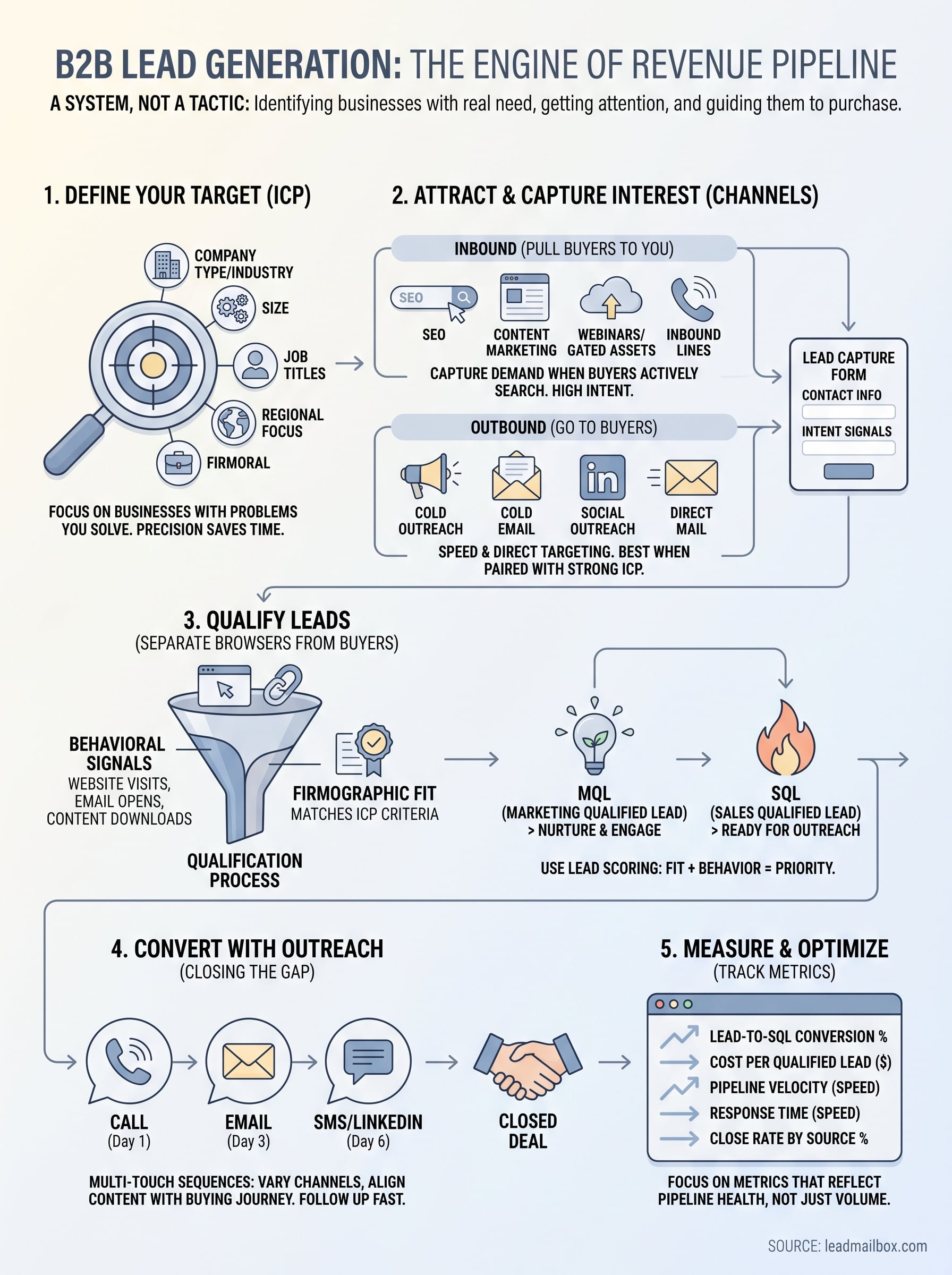
The process starts before you send a single email or run a single ad. You need to define who you're trying to reach, meaning the specific company types, industries, sizes, and job titles that represent your best potential customers. This profile, commonly called an Ideal Customer Profile (ICP), keeps your outreach focused on businesses that actually have the problem your product solves. Without this step, every other part of the process runs on guesswork.
Spending two hours defining your ICP will save you two months of chasing leads that were never a fit.
Attract and capture interest
Once you know who you're targeting, you build the channels and content that pull those contacts toward you or push your message directly to them. This includes content marketing, paid advertising, cold outreach, referral programs, and events. The goal at this stage is to generate enough awareness that your target contacts engage with your brand and give you a way to follow up, whether that's a form submission, an inbound call, or a direct reply to an email sequence. Every lead capture mechanism you build should connect back to a place where you can track and manage the contact.
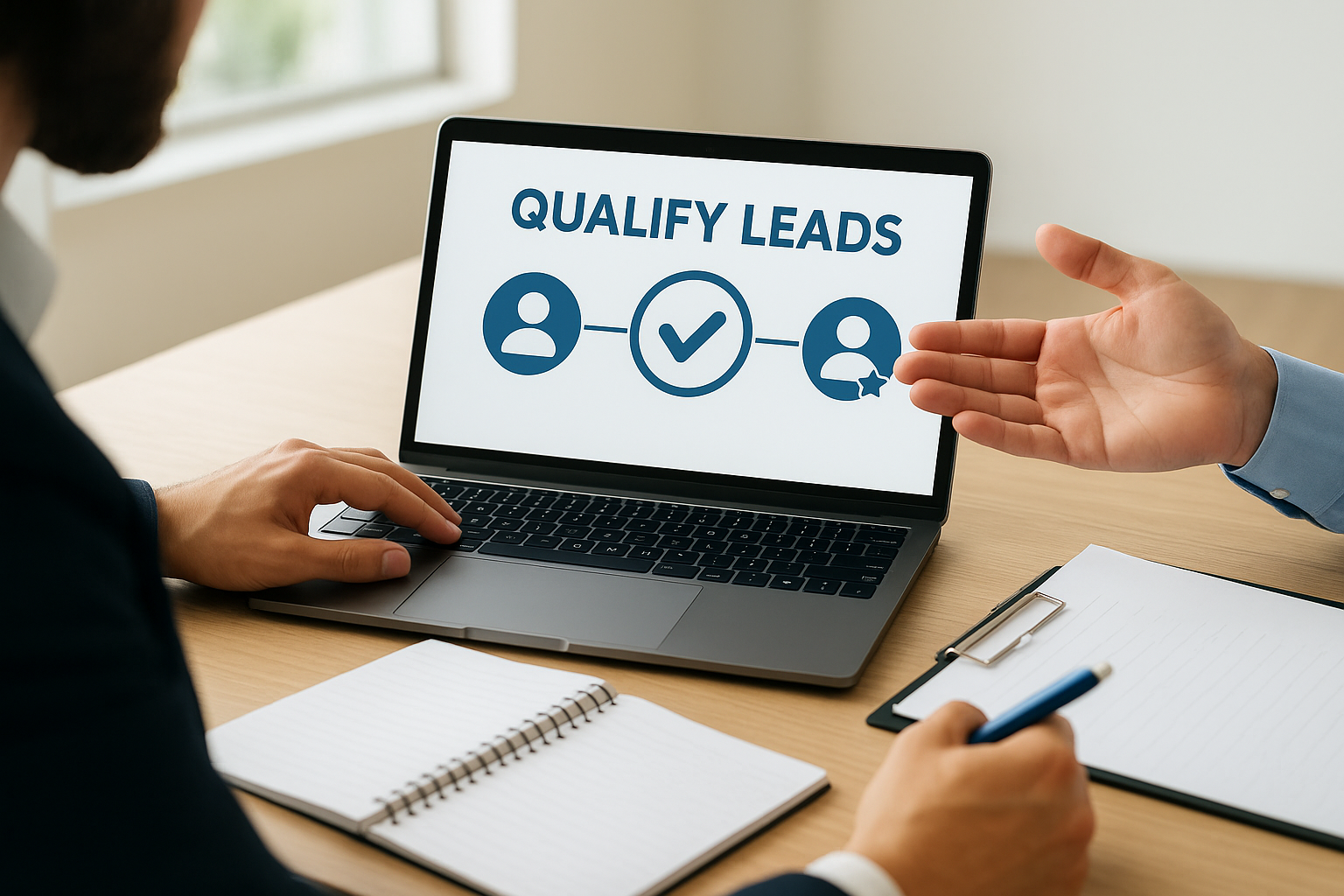
Qualify leads before handing them to sales
Capturing a contact's information doesn't make them a sales-ready lead. Qualification is where you separate contacts who are browsing from those with genuine buying intent. Your team can qualify leads through automated scoring based on behavior, direct discovery calls, or a combination of both. Contacts that meet your qualification criteria move forward as Sales Qualified Leads (SQLs) and get assigned to a sales rep for direct outreach. Those who aren't ready yet stay in a nurture track until their intent signals shift. Getting this handoff right keeps your sales team focused on conversations that have a realistic path to a closed deal.
Inbound vs outbound channels for B2B leads
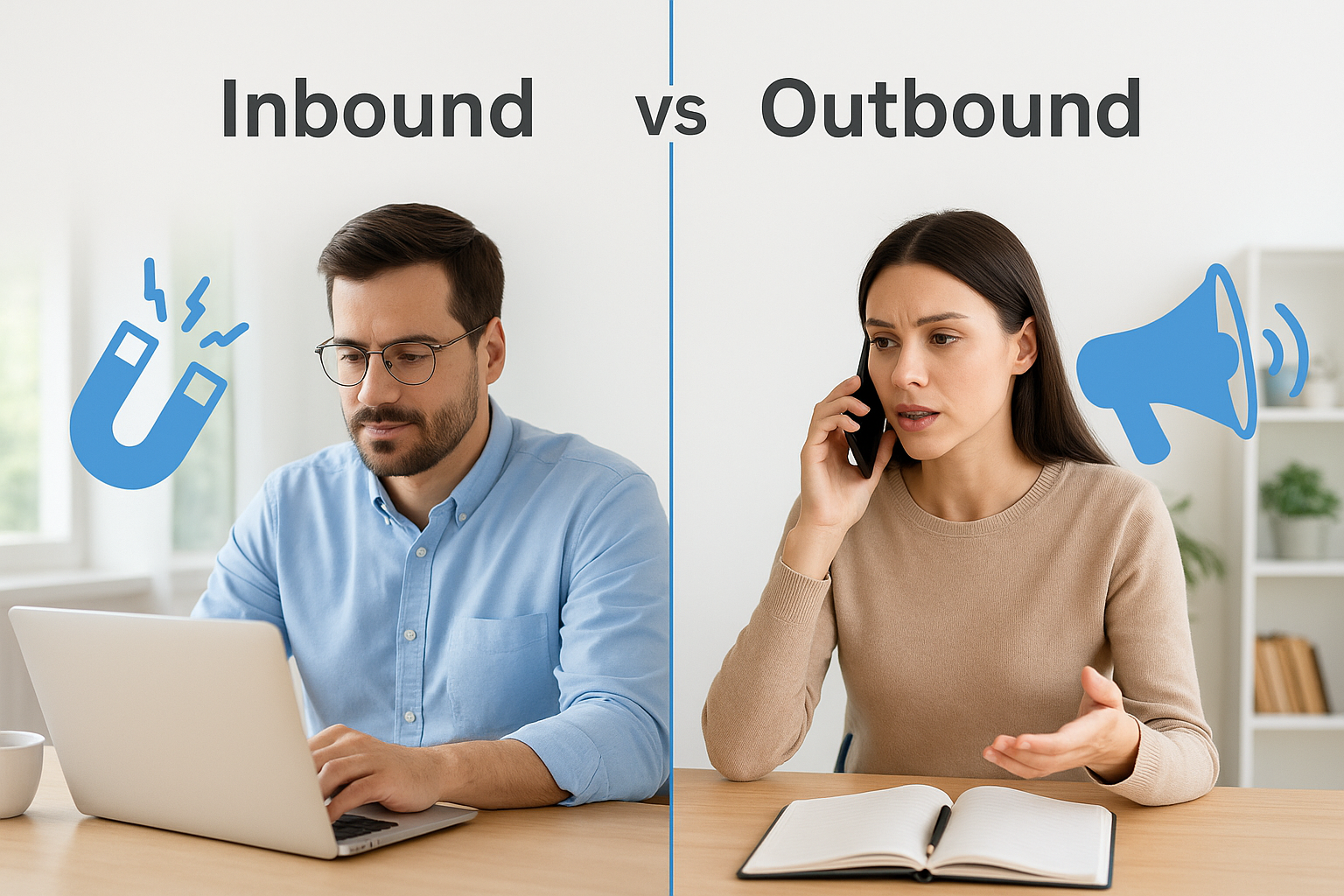
Once you understand what is B2B lead generation and how the qualification process works, your next decision is which channels you'll use to reach potential buyers. Every channel you use falls into one of two categories: inbound, where buyers come to you, or outbound, where you go to them. Neither approach is automatically better. The right mix depends on your sales cycle, your budget, and how aware your target market already is of the problem you solve.
Inbound channels pull buyers to you
Inbound lead generation works by creating resources and content that attract buyers who are already searching for solutions. When someone types a question into Google, clicks an ad, or reads a guide your company published, they land in your orbit. If your content answers their question well, they're likely to submit a form, call your inbound line, or sign up for a trial. The key advantage of inbound is intent: people who find you through search or content are usually further along in their evaluation than someone who received a cold email.
Common inbound channels include:
- Search engine optimization (SEO): Blog posts, landing pages, and guides optimized to rank for searches your target buyers run
- Pay-per-click advertising: Paid search and display ads that capture demand at the moment a buyer is actively looking
- Webinars and gated content: Resources that require contact information to access, building your lead list while delivering value
- Inbound phone lines: A direct number that lets interested buyers reach your team immediately when they're ready to talk
Outbound channels put you in front of buyers first
Outbound lead generation flips the dynamic. Instead of waiting for buyers to find you, your team reaches out directly to contacts who match your ideal customer profile. Cold calling, cold email sequences, LinkedIn outreach, and direct mail are all outbound channels. The advantage is speed: you don't have to wait for content to rank or ads to mature.
Outbound works best when you pair it with strong targeting. Reaching 200 well-matched contacts beats blasting 2,000 who have no reason to care.
The real risk with outbound is volume without precision. Sending generic messages to a purchased list wastes your team's time and damages your sender reputation. Outbound performs when your list is built around a tight ICP and your message connects directly to a problem that specific audience actually has.
Strategies to generate and convert B2B leads
Knowing what is B2B lead generation gives you the framework, but the strategies you choose determine whether that framework actually produces revenue. The gap between generating a contact and converting them into a customer is where most teams lose deals. Consistent, structured outreach across multiple channels closes that gap by keeping your brand visible and your value proposition in front of the right buyers at the right time.
Build multi-touch outreach sequences
A single email or one cold call rarely moves a B2B buyer from interest to a meeting. Multi-touch sequences combine calls, emails, and SMS messages in a timed cadence so your team makes repeated contact without overwhelming the prospect. Each touchpoint should add something new: a relevant case study, a direct question about a specific pain point, or a straightforward ask for a short call. Varying the channel across the sequence, phone on day one, email on day three, SMS on day six, increases your chances of reaching the contact where they're most responsive.
The average B2B buyer needs multiple touchpoints before agreeing to a meeting, so a structured sequence consistently outperforms one-off outreach.
Align content with each stage of the buying journey
Buyers at different stages of evaluation need different information. A contact who just learned your company exists needs educational content that connects your solution to their problem. A contact who already compared three vendors needs specific proof: case studies, ROI data, or a live demo. Sending the wrong content at the wrong stage stalls deals because you're either asking for commitment too early or delivering too little when the buyer is ready to move.
Map your content assets to three stages: awareness, where buyers recognize the problem; consideration, where they evaluate solutions; and decision, where they compare final options. When your outreach matches where the buyer actually is, your conversion rate improves because every message feels relevant rather than generic.
Follow up faster than your competition
Speed to response is one of the most underrated conversion factors in B2B sales. When a buyer submits a form or calls your inbound line, their intent is at its highest in that moment. Delayed follow-up, even by a few hours, lets that intent fade and gives competing vendors time to reach them first. Use automated alerts and click-to-call tools to make sure your team reaches out within minutes of a lead coming in.
Metrics and lead scoring that keep quality high
Knowing what is b2b lead generation is only half the equation. The other half is measuring whether your system is actually working. Tracking the right metrics keeps your team focused on quality rather than volume, and lead scoring adds a structured way to rank contacts so your reps spend time on the opportunities most likely to close.
Track the metrics that actually reflect pipeline health
Most teams track raw lead volume and stop there. That number tells you how many contacts entered the top of your funnel, but it says nothing about whether those contacts were worth pursuing. The metrics that give you real signal are the ones connected to movement through your pipeline. Conversion rate by stage, cost per qualified lead, and average time to close show you exactly where your system is working and where it's breaking down.
Here are the core metrics worth tracking consistently:
- Lead-to-SQL conversion rate: The percentage of raw leads that qualify as sales-ready
- Cost per qualified lead: What you're actually spending to generate leads worth pursuing
- Pipeline velocity: How fast leads move through each stage before closing or dropping off
- Response time: How quickly your team contacts new leads after they come in
- Close rate by lead source: Which channels produce leads that actually become customers
Your close rate by lead source is often the single most useful number you can track, because it tells you exactly where to increase budget and where to cut.
Use lead scoring to prioritize your team's time
Lead scoring assigns numeric values to contacts based on behaviors and characteristics that signal buying intent. A contact who visited your pricing page twice, opened three emails, and matches your ideal customer profile scores higher than one who downloaded a single resource and went quiet. Your sales team uses those scores to decide who gets a call today versus who stays in a nurture sequence.
Building your scoring around two categories makes it more accurate: firmographic fit (industry, company size, job title) and behavioral signals (page visits, email opens, demo requests). When you combine both, your scoring reflects who the contact is and what they've actually done. That combination produces a prioritized list your reps can work through with confidence rather than guessing which contacts deserve their attention first.
Next steps
Now that you understand what is B2B lead generation and how each piece connects, the next move is putting it into practice. Start by defining your ideal customer profile clearly, because every other part of the system depends on knowing exactly who you're targeting. From there, choose two or three channels that match your budget and sales cycle, build a qualification process, and set up the metrics that tell you whether your pipeline is actually healthy.
The biggest mistake most teams make is treating lead generation as a one-time project rather than an ongoing system. Consistent outreach, fast follow-up, and accurate lead scoring are what separate teams that hit quota from those that scramble at the end of every quarter.
If you want a single platform that handles lead aggregation, calling, SMS, and email outreach in one place, explore what LeadMailbox can do for your sales team and see how it fits your process.