

12 Real Estate CRM Pricing Plans & Costs Compared (2026)
Picking the right CRM can make or break your real estate business, but figuring out real estate CRM pricing is rarely straightforward. Between per-user fees, tiered feature gates, annual contracts, and hidden add-on costs, comparing platforms side by side takes real effort. And overpaying for a tool that doesn't fit your workflow? That's money straight out of your commission checks.
The problem is that most CRM pricing pages are designed to confuse, not clarify. Some platforms advertise a low starting price but lock essential features, like dialer access or drip campaigns, behind expensive upgrades. Others bundle everything together at a flat rate that sounds great until you realize you're paying for tools you'll never touch. Knowing what you actually need before you start comparing costs is the only way to avoid getting locked into the wrong contract.
At LeadMailbox, we've spent over 20 years building a lead management platform with built-in telephony, SMS, email campaigns, and AI agents, all on a month-to-month plan with no long-term commitments. We know what fair CRM pricing looks like because we've been doing it since 2004. That perspective shapes this guide. Below, we break down 12 real estate CRM pricing plans for 2026, covering what each platform charges, what you get at each tier, and where the hidden costs tend to show up, so you can make a decision based on real numbers, not marketing spin.
1. LeadMailbox
LeadMailbox is a lead management and sales enablement platform that has been in the market since 2004. Unlike many CRMs built primarily for contact organization, it combines lead aggregation, built-in communication tools, and AI-powered automation into one platform at a price point that small to mid-sized real estate sales teams can actually work with.

What it is and how it works
LeadMailbox connects to hundreds of lead sources and pulls all your incoming leads into a single organized system. From there, you can call, text, or email contacts directly within the platform using built-in telephony tools, including a power dialer, click-to-call functionality, and inbound number management. Every interaction gets logged automatically, so your team spends less time on manual data entry.
The platform also includes AI agents that respond to incoming text messages, handle inbound calls, and draft emails on your behalf. This means your leads get contacted immediately, even when your team is occupied, which directly affects conversion rates. You can build drip campaigns across SMS and email without needing a separate marketing tool layered on top.
Best for
LeadMailbox works best for real estate sales teams and individual agents who generate a high volume of leads from multiple sources and need a system that handles both organization and outreach in one place. If you're currently piecing together a CRM, a dialer, and an email tool from three different vendors, this platform removes that complexity.
It also suits teams that want month-to-month flexibility without annual contract pressure. If you've been burned by a long-term CRM commitment that didn't deliver, the no-lock-in model is a practical advantage when comparing real estate CRM pricing options across the market.
Pricing and common add-ons
LeadMailbox runs on a month-to-month subscription model, meaning you're not locked into a 12-month contract to access the full platform. Core features, including telephony, SMS, email campaigns, and AI agents, come bundled into the subscription without requiring enterprise-level spending.
The month-to-month structure means you can scale up or cancel based on your actual business needs, not a contract you signed a year ago.
Common add-ons include additional lead source integrations and expanded telephony capacity for high-volume teams. Pricing is also adjustable based on team size and usage, so you're not paying a flat rate for seat counts that don't match your operation. For current plan details, visit leadmailbox.com directly to get accurate numbers for your specific setup.
2. Wise Agent
Wise Agent is a real estate-specific CRM that has built a following among independent agents and small teams looking for a straightforward platform at a lower price point. It covers the core CRM functions you'd expect, including contact management, transaction tracking, and automated follow-up, without a steep learning curve or enterprise-level spending.
What it is and how it works
The platform organizes your contacts, tasks, and transactions in one dashboard, letting you set up automated drip campaigns across email and SMS. It includes a built-in calling feature, landing pages, and a referral tree for tracking lead sources. Wise Agent also connects with lead sources like Zillow and Realtor.com, so your pipeline stays populated without manual imports on your end.
Best for
This CRM fits solo agents and small real estate teams who want a dedicated real estate platform without paying for tools they'll never open. The feature set is intentionally focused, which keeps things simple if your workflow revolves around contact organization and automated follow-up rather than advanced dialing or AI-powered outreach.
Teams that rely heavily on phone-based sales and need a built-in power dialer or multi-channel automation will likely find Wise Agent underpowered for that side of their operation.
Pricing and common add-ons
Wise Agent charges a flat monthly rate of $49, which covers unlimited contacts and most core features. An annual billing option brings the per-month cost down slightly. When comparing real estate CRM pricing across platforms, the flat structure is easy to budget for, though you pay the same rate whether you're running a team of two or ten.
The $49/month base rate looks clean on paper, but SMS credits and additional integrations add to the real monthly cost.
Common add-ons include SMS credit packages, expanded integrations, and priority support tiers, which can push your effective spend noticeably above the advertised base price.
3. Follow Up Boss
Follow Up Boss is a real estate CRM built specifically for agents and teams who prioritize speed-to-lead and organized follow-up across multiple communication channels. It has become one of the more widely recognized platforms in the real estate space, largely because of its clean interface and strong integration options with popular lead sources.

What it is and how it works
Follow Up Boss pulls leads in from sources like Zillow, Realtor.com, and your own website, then routes them automatically to the right agent based on rules you set up. The platform includes built-in calling, texting, and email tools, so your team can reach out without switching between apps. It also tracks every touchpoint and surfaces tasks so nothing gets missed in a busy pipeline.
Best for
This platform suits growing real estate teams that manage leads from multiple sources and need a reliable routing and follow-up system. If your team is large enough to need assignment rules and accountability reporting, Follow Up Boss handles that well. Solo agents who want a simpler setup may find some of the features more than they need for day-to-day use.
Pricing and common add-ons
When comparing real estate CRM pricing, Follow Up Boss lands at a higher price point than many alternatives. The base Grow plan starts at $69 per month for a single user, with team plans scaling significantly from there. The Pro plan runs $499 per month and the Platform tier reaches $1,000 per month for larger operations.
The per-user pricing model means your total monthly cost grows quickly as your team expands, so model out your full seat count before committing.
Add-ons include Pond, the AI-powered follow-up assistant, and additional dialer minutes, both of which increase your effective monthly spend beyond the base rate.
4. Lone Wolf Relationships
Lone Wolf Relationships is a real estate CRM developed by Lone Wolf Technologies, a company that has built its reputation around transaction management software for brokerages and agents. The CRM component is designed to slot into a broader real estate tech stack rather than function as a standalone tool, which shapes both its strengths and its limitations.
What it is and how it works
Lone Wolf Relationships centralizes contact management, lead tracking, and automated follow-up within a platform that connects to the wider Lone Wolf ecosystem. It lets you organize your database, set up drip campaigns, and track where each contact sits in your pipeline. The integration with Lone Wolf's transaction tools means that when a contact moves from lead to active client, the data flows across the system without manual transfers between platforms.
Best for
This CRM fits agents and brokerages that are already using Lone Wolf's transaction or back-office products and want to bring lead management into the same environment. If you're running your deals through Lone Wolf's transaction side, adding Relationships keeps your workflow connected. Agents looking for a standalone CRM with strong built-in communication tools will find the feature set limited compared to purpose-built options.
Pricing and common add-ons
Lone Wolf does not publish transparent real estate CRM pricing for Relationships on its website. Pricing is typically delivered through a direct sales conversation, which makes upfront comparison harder than it should be.
When a vendor requires you to contact sales before sharing any pricing, budget extra time for the evaluation process and push for written quotes.
Common add-ons involve integrations with other Lone Wolf products, and bundled pricing varies based on brokerage size and which modules you combine.
5. Top Producer
Top Producer is one of the longest-running real estate CRM platforms on the market, with roots going back decades. It focuses on helping agents stay in front of their database through automated follow-up, market reports, and transaction management tools built specifically for real estate workflows.
What it is and how it works
The platform centers on contact and pipeline management, letting you track leads, active clients, and past clients in one organized database. Top Producer sends automated market reports to your contacts, which keeps your name in front of prospects without requiring manual outreach every time. It also integrates with lead sources like Zillow and Realtor.com to pull new leads directly into your pipeline.
You can build follow-up plans and action plans that trigger based on where a contact sits in your workflow, which reduces the manual work of remembering who needs a call or email on any given day.
Best for
Top Producer suits established agents with a large existing database who want to stay in contact with past clients and sphere contacts over the long term. The market report automation is a standout feature for agents who prioritize relationship-based lead nurturing over high-volume outbound prospecting.
Pricing and common add-ons
When comparing real estate CRM pricing across platforms, Top Producer charges around $129 per month per user for its core plan. An annual billing option reduces the per-month cost slightly.
The per-user fee adds up quickly if you're running a team, so factor in your full headcount before comparing it against flat-rate alternatives.
Common add-ons include FiveStreet lead routing and expanded integration access, both of which push your total monthly spend noticeably above the base rate.
6. RealOffice360
RealOffice360 is a real estate CRM built with simplicity as its core design principle. It targets individual agents who want a visual, clean workspace to manage their contacts and pipeline without navigating complex feature sets or enterprise-level configurations.
What it is and how it works
The platform gives you a visual pipeline view where you can see every contact and deal at a glance, organized by where each relationship stands. You drag contacts between stages as relationships progress, which keeps your database current without requiring detailed data entry. RealOffice360 also supports task management and basic follow-up reminders, letting you set touchpoints so active prospects don't fall through the cracks.
Built to stay lightweight, the platform loads fast and remains intuitive for agents who are not technically inclined. It does not include a built-in dialer or SMS automation, so agents who rely on high-volume phone outreach will need to pair it with a separate communication tool, which adds cost and complexity.
Best for
RealOffice360 works best for solo agents and small teams who prioritize relationship tracking over outbound automation. If your business runs on referrals and sphere-of-influence contacts rather than high-volume lead intake from digital sources, the visual pipeline fits that workflow well. Agents managing large incoming lead volumes from paid sources will find the platform underpowered.
Pricing and common add-ons
When comparing real estate CRM pricing across platforms, RealOffice360 stands out as one of the more affordable options. Plans start at around $29 per month, with a free tier available for agents managing a smaller contact volume.
The free plan is functional for solo agents getting started, but most active professionals will hit its contact limits quickly and need to upgrade.
Common add-ons are limited given the platform's lean feature set, but premium integrations and expanded contact capacity come with the paid tiers.
7. RealtyJuggler
RealtyJuggler is a budget-focused real estate CRM that markets itself primarily on price. It covers contact management, task tracking, and basic follow-up automation, designed for agents who want a functional system without paying for anything beyond the essentials.
What it is and how it works
The platform gives you a contact database and transaction tracker built around the real estate sales cycle. You can log contacts, assign follow-up tasks, and set up drip email campaigns to stay in touch with leads and past clients. It also includes a built-in calculators section with tools for commissions, mortgages, and other real estate math, which saves you from hunting for a separate tool mid-workflow.
Beyond contact management, the interface is functional rather than polished. It does not include built-in telephony, SMS automation, or AI-powered outreach tools, so agents who rely on phone and text outreach to work their pipeline will need to layer in a separate communication platform, which adds both cost and complexity.
Best for
RealtyJuggler works best for individual agents and part-time real estate professionals who want a low-cost way to organize their database and track follow-up tasks. If your business runs on email outreach and personal calls rather than automated multi-channel campaigns, this platform covers the essentials at a price that fits a tight budget.
Pricing and common add-ons
When comparing real estate crm pricing across platforms, RealtyJuggler charges a flat annual fee of around $179 per year, which breaks down to roughly $15 per month. There are no per-user fees and no tiered plans to sort through.
At roughly $15 per month, RealtyJuggler is one of the lowest-cost options on this list, but the feature set reflects that price directly.
Add-ons are minimal given the platform's focused scope, and expanded functionality is not something the platform is built to deliver through upgrades.
8. monday CRM
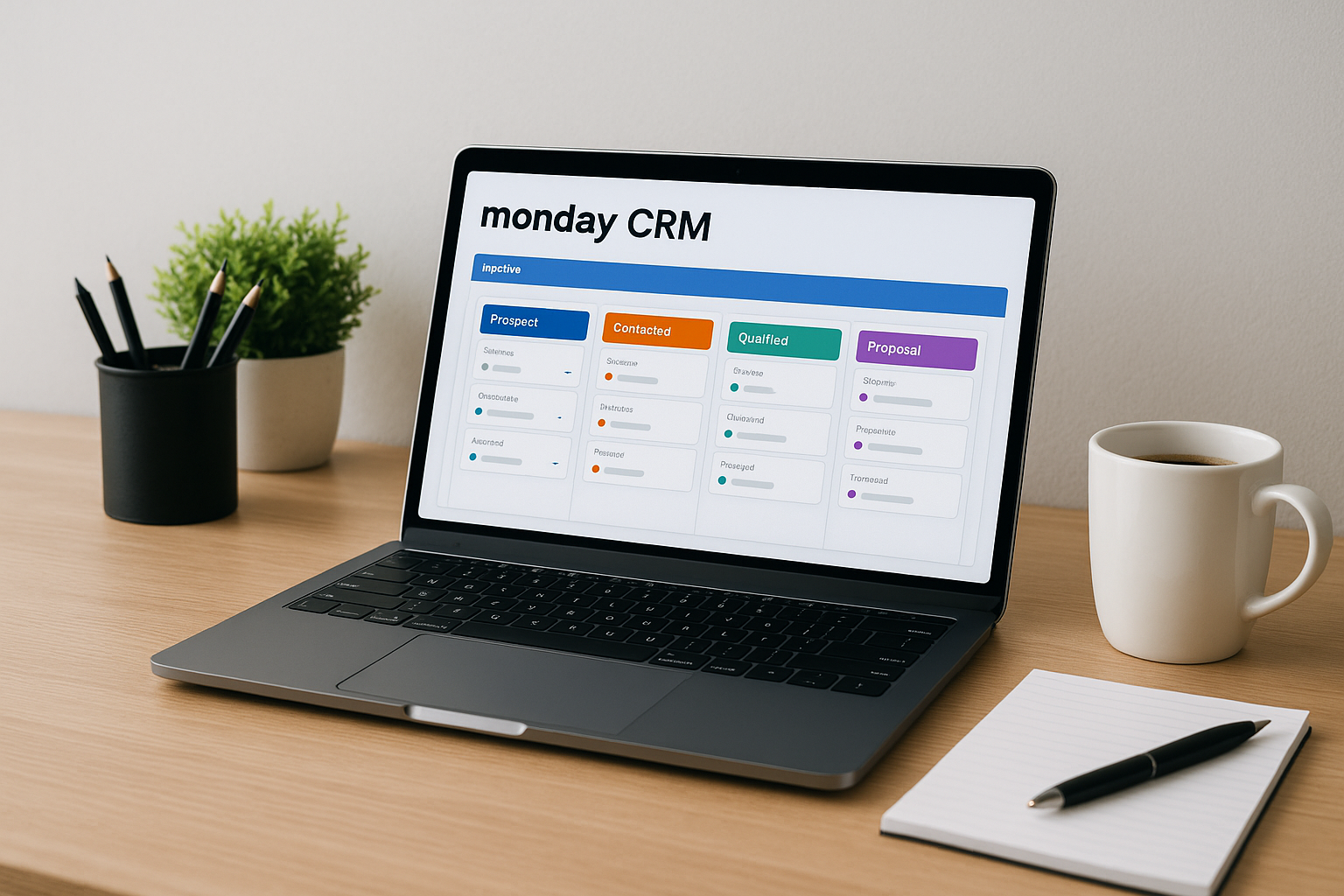
monday CRM is a general-purpose CRM platform built by monday.com, a company known for its visual project management tools. Unlike the real estate-specific platforms on this list, monday CRM is designed to adapt to any industry, which gives it flexibility but also means it requires more setup work before it fits a real estate workflow.
What it is and how it works
monday CRM organizes your contacts, deals, and activities in customizable boards that you configure to match your pipeline stages. You build the columns, labels, and automations yourself, which means the platform does exactly what you set it up to do. It supports email integration, task automation, and activity tracking with a clean visual interface that most sales teams pick up quickly.
Because it lacks built-in real estate-specific workflows, you'll spend time building templates and automations from scratch rather than using prebuilt real estate tools.
Best for
This CRM suits small sales teams and solo operators who already use monday.com for project management and want to keep their tools consolidated. If your real estate business is non-traditional or you need a highly customizable pipeline, the flexibility is useful. Dedicated agents who want an out-of-the-box setup will likely find the configuration demands more burden than benefit.
Pricing and common add-ons
When comparing real estate CRM pricing, monday CRM starts at $15 per seat per month on the Basic plan, with more capable tiers running $20 and $33 per seat per month, billed annually. Free trials are available.
Per-seat pricing adds up fast on team plans, so calculate your full headcount cost before treating the base rate as your actual budget number.
Common add-ons include expanded automation capacity and advanced reporting, both of which require upgrading to a higher tier.
9. CarrotCRM
CarrotCRM is a lead management and follow-up tool built by Carrot, a company that primarily sells website and lead generation services to real estate investors and agents. The CRM is designed to complement Carrot's website platform, which means it works best when you're already generating leads through their web properties rather than as a standalone tool.
What it is and how it works
CarrotCRM connects directly to your Carrot website and captures incoming leads automatically, routing them into a contact database where you can manage follow-up tasks, notes, and deal stages. The platform includes basic SMS and email automation, letting you set up sequences that trigger when a new lead comes in. It also tracks where each contact sits in your pipeline, so you can see at a glance which leads need attention.
Because the CRM is tightly integrated with Carrot's website product, lead capture and pipeline tracking work smoothly together. However, if you bring in leads from sources outside the Carrot ecosystem, the integration experience becomes less seamless and requires more manual effort on your end.
Best for
CarrotCRM suits real estate investors and wholesalers who are already using Carrot for their web presence and want a lightweight follow-up system built into the same environment. If your lead generation runs entirely through Carrot websites, the native connection removes manual import steps.
Agents and teams that pull leads from multiple external platforms like Zillow or paid social ads will find the tool too narrow. The platform is built around Carrot's own lead sources, so its value drops sharply outside that context.
Pricing and common add-ons
When comparing real estate CRM pricing, CarrotCRM is included with select Carrot website plans, which start around $99 per month and scale depending on the features and site count you need. The CRM is not sold as a standalone product.
Bundling the CRM with a website plan means you're paying for both products together, so evaluate whether the website component actually fits your business before treating the combined cost as a CRM expense.
Common add-ons include advanced automation features and expanded lead capture tools tied to higher-tier Carrot plans.
10. Real Geeks
Real Geeks is a real estate platform that bundles an IDX-powered lead generation website with a built-in CRM, targeting agents and teams who want their marketing and pipeline management connected in one system. The company's core product is the website technology, which means the CRM is built to support that lead generation engine rather than stand on its own.

What it is and how it works
The platform captures leads from your website automatically and routes them into a contact pipeline where you can track browsing behavior and listing activity before you reach out. This gives you context that cold CRM records typically lack.
Real Geeks also includes SMS and email drip campaigns that trigger based on what a lead does on your site, so your follow-up stays tied to their actual interests rather than a generic sequence.
Best for
This platform suits agents and small teams who want to generate leads through their own website and manage the entire follow-up process inside the same tool. If your business is built around IDX search traffic and online lead capture, the native connection between website and CRM removes manual import steps and keeps data clean.
- Teams running high-volume outbound prospecting from third-party lead sources
- Agents who need a standalone CRM without a bundled website product
Both groups will find the package structure less cost-effective since you're paying for both products regardless of how much you use each.
Pricing and common add-ons
When comparing real estate CRM pricing, Real Geeks starts at around $299 per month for a single agent, with team plans scaling higher from there.
You're paying for the website platform as much as the CRM itself, so weigh that bundled cost carefully against standalone CRM alternatives.
Common add-ons include paid advertising management services and expanded team seat access, both of which increase your monthly spend.
11. Sierra Interactive
Sierra Interactive is a premium real estate platform that combines an IDX website, a built-in CRM, and paid advertising management into one system. It targets high-volume agents and growing teams who want their lead generation and pipeline management running under the same roof, without stitching together separate tools to make it work.
What it is and how it works
The platform captures leads through an IDX-powered website and routes them directly into the CRM, where you can track contact activity, assign follow-up tasks, and monitor where each prospect sits in your pipeline. Sierra Interactive includes automated drip campaigns via SMS and email, triggered by lead behavior on your website, so your follow-up stays relevant rather than generic.
The system also supports team lead routing and accountability tracking, which matters when you're managing a group of agents and need visibility into who is working which leads and what actions they've taken.
Best for
Sierra Interactive works best for experienced agents and mid-sized real estate teams that generate a substantial portion of their leads through paid search and need a platform built to handle that volume. If you're running Google Ads campaigns and want your ad spend, website traffic, and CRM pipeline connected in one place, the native integration removes friction.
Pricing and common add-ons
When comparing real estate CRM pricing, Sierra Interactive starts at approximately $500 per month for a single agent, with team plans running higher depending on seat count and the features you need.
The entry price reflects a bundled product, so factor in how much you'll actually use the website and advertising components before comparing it against standalone CRM costs.
Common add-ons include managed advertising services and expanded team access, both of which push your total monthly cost well above the base rate.
12. CINC
CINC (Commissions Inc.) is a premium real estate lead generation and CRM platform built for high-volume agents and large teams that want their paid advertising, IDX website, and pipeline management running inside one system. It sits at the enterprise end of the market, both in features and price, and is designed for teams serious about scaling through paid digital lead generation.
What it is and how it works
CINC captures leads through paid search and social advertising campaigns managed within its platform, routes them into a built-in CRM, and triggers automated follow-up sequences across email and SMS. The system tracks lead behavior on your website, including which listings contacts viewed and how often they return, giving your agents context before they pick up the phone. Team lead routing, accountability dashboards, and AI-powered follow-up tools are also built into the platform, so you're not managing those pieces manually.
Best for
CINC works best for large real estate teams and mega-agents running significant paid advertising budgets who want a single platform connecting ad spend, website traffic, and lead follow-up. If your growth strategy depends on consistent digital lead volume and you have the budget to support that approach, CINC is built for that operating model. Solo agents and small teams with limited ad budgets will find the cost hard to justify.
Pricing and common add-ons
When evaluating real estate CRM pricing at this tier, CINC starts at roughly $1,000 per month, with costs scaling based on team size and advertising spend.
The base price covers the platform, but your actual monthly spend climbs significantly once you add advertising budgets on top of the subscription fee.
Common add-ons include expanded team seat access and managed advertising services.
Your next step
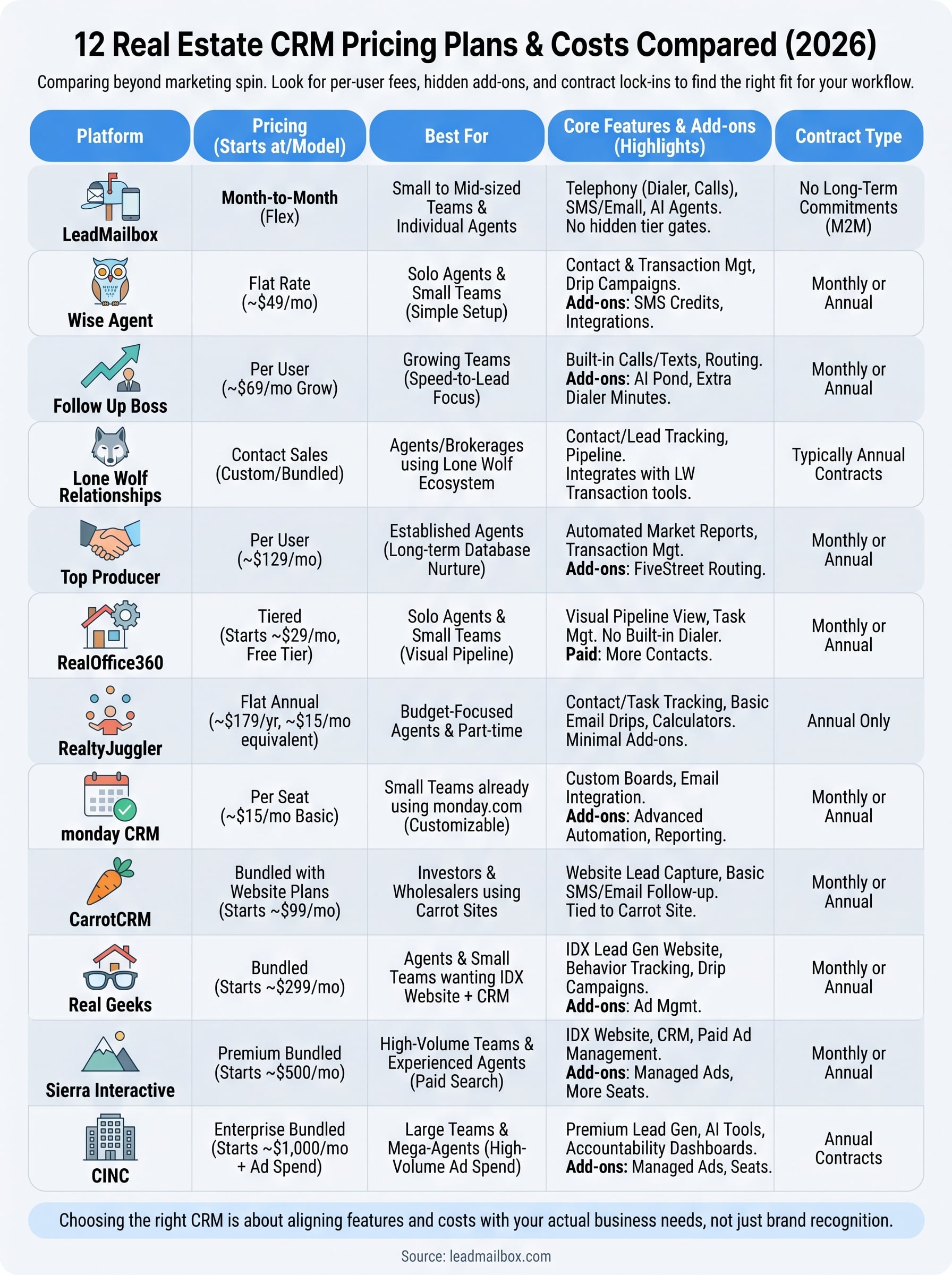
You've now seen how real estate CRM pricing plays out across 12 platforms, from $15 per month to well over $1,000 per month. The right choice depends on what your business actually needs: a lightweight contact organizer, a bundled website platform, or a full lead management system with built-in communication tools. Most agents overpay because they pick a platform based on brand recognition rather than a clear read on their own workflow.
If you need a platform that handles lead aggregation, telephony, SMS, email campaigns, and AI-powered outreach in one place without locking you into a long-term contract, LeadMailbox is worth a closer look. The month-to-month model means you commit based on results, not a contract you signed before you knew if the tool actually fit your process. Visit LeadMailbox to see current pricing and explore whether it fits your sales operation.