

Predictive Dialer vs Auto Dialer: Key Differences & Use Cases
Every outbound call your sales team makes costs time. Multiply that by dozens or hundreds of leads per day, and the dialing method you choose starts to have a real impact on how many conversations actually happen. That's where the predictive dialer vs auto dialer debate comes in, two tools that both automate dialing but work in fundamentally different ways under the hood.
An auto dialer calls numbers from a list one at a time. A predictive dialer uses algorithms to call multiple numbers simultaneously, routing answered calls to available agents. The distinction sounds simple, but it affects call volume, agent productivity, and even your compliance obligations under federal telecom regulations. Picking the wrong one can mean either wasted agent idle time or dropped calls that frustrate potential customers.
At LeadMailbox, our telephony suite, including click-to-call, power dialer, and inbound number management, is built to help sales teams connect with more leads without juggling multiple tools. We've spent over 20 years helping businesses get this right. In this guide, we'll break down the key differences between predictive and auto dialers, walk through real use cases for each, and help you figure out which one actually fits your operation.
Why the right dialer type matters
The dialer you choose directly shapes how productive your agents are and how many leads convert each day. A team making 100 dials daily with the wrong tool absorbs hidden costs in idle time, dropped connections, and missed follow-ups. Before you can make a smart choice in the predictive dialer vs auto dialer comparison, you need a clear picture of what's actually at stake across your operation.
Your call volume and team size drive the decision
Call volume and agent headcount are the two biggest factors when selecting a dialing system. If you have a small team working a modest lead list, an auto dialer keeps things simple and controlled without overwhelming your workflow. If you're running a larger outbound operation where agents would otherwise sit idle between calls, a predictive dialer starts to make real financial sense. The algorithm behind a predictive dialer adjusts how many lines it dials simultaneously based on agent availability and average call duration, keeping your people in conversations instead of waiting.
Idle agent time is one of the biggest hidden costs in outbound sales. Even a few extra minutes of wait time per hour compounds across a team of ten agents into hours of lost selling time each day.
Many sales teams don't realize how much dead time between calls they're absorbing until they switch tools and run the numbers. Matching your dialer type to your actual team size and daily call targets is the first step toward fixing that.
Lead quality changes the math
Not all leads respond the same way, and the quality and source of your lead list should directly influence which dialer you use. High-intent leads who opted in recently respond well to the personal, sequential approach of an auto dialer. You get a clean, one-at-a-time flow that gives your agent a moment to review the record before the call connects. With cold or lower-quality lists, though, a large percentage of numbers simply won't answer, and a predictive dialer compensates for that automatically by dialing multiple numbers at once.
Your list contact rate plays a major role in this calculation. If only 20% of your list picks up, waiting for each number to ring out before moving to the next one wastes a significant chunk of your agent's shift. A predictive dialer handles that mathematically by factoring historical answer rates into its pacing. But if you're working a warm list where most contacts expect your call, the added complexity of predictive dialing can create friction, including dropped calls and a less personal opening experience for the prospect.
How predictive dialers work
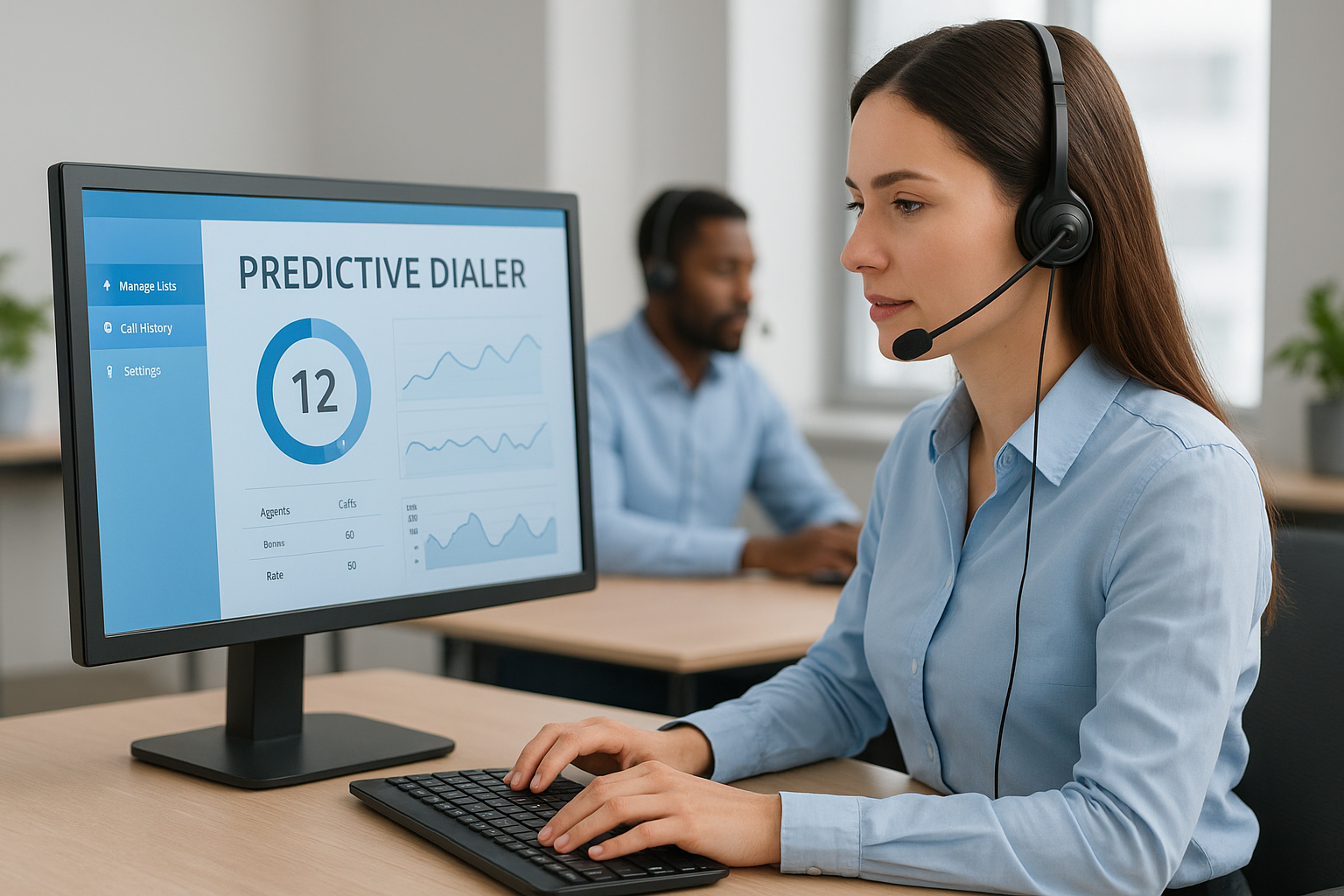
A predictive dialer uses a real-time algorithm to dial multiple numbers simultaneously before an agent is even free. The system tracks live data points like average call duration, agent availability, and historical answer rates, then adjusts how aggressively it dials to ensure an agent is ready the moment a contact picks up. The goal is simple: eliminate idle time between calls by keeping the pipeline in constant motion.
The pacing algorithm does the heavy lifting
The core of any predictive dialer is its pacing engine. As calls go out in parallel, the system monitors how many agents are active, how long current calls are running, and what percentage of numbers are actually connecting. When agents start wrapping up, the system dials ahead automatically. If your answer rate drops, the dialer compensates by calling more lines at once. This is what separates predictive dialers from simpler auto dialers in the predictive dialer vs auto dialer comparison, the system learns and adjusts dynamically rather than following a fixed one-at-a-time sequence.
Predictive dialers can reduce agent idle time by up to 300% compared to manual dialing, which means your team spends more of their shift actually talking to prospects.
What happens when a contact answers
When a call connects, the dialer immediately routes it to an available agent along with the relevant lead record. The agent sees the contact's information on screen before they speak the first word. If no agent is immediately available when a call connects, the call either drops or plays a pre-recorded message, which is a real compliance and experience concern that you need to manage carefully. Keeping your agent-to-dialer ratio properly configured prevents this scenario and keeps your connection rates clean.
How auto dialers work
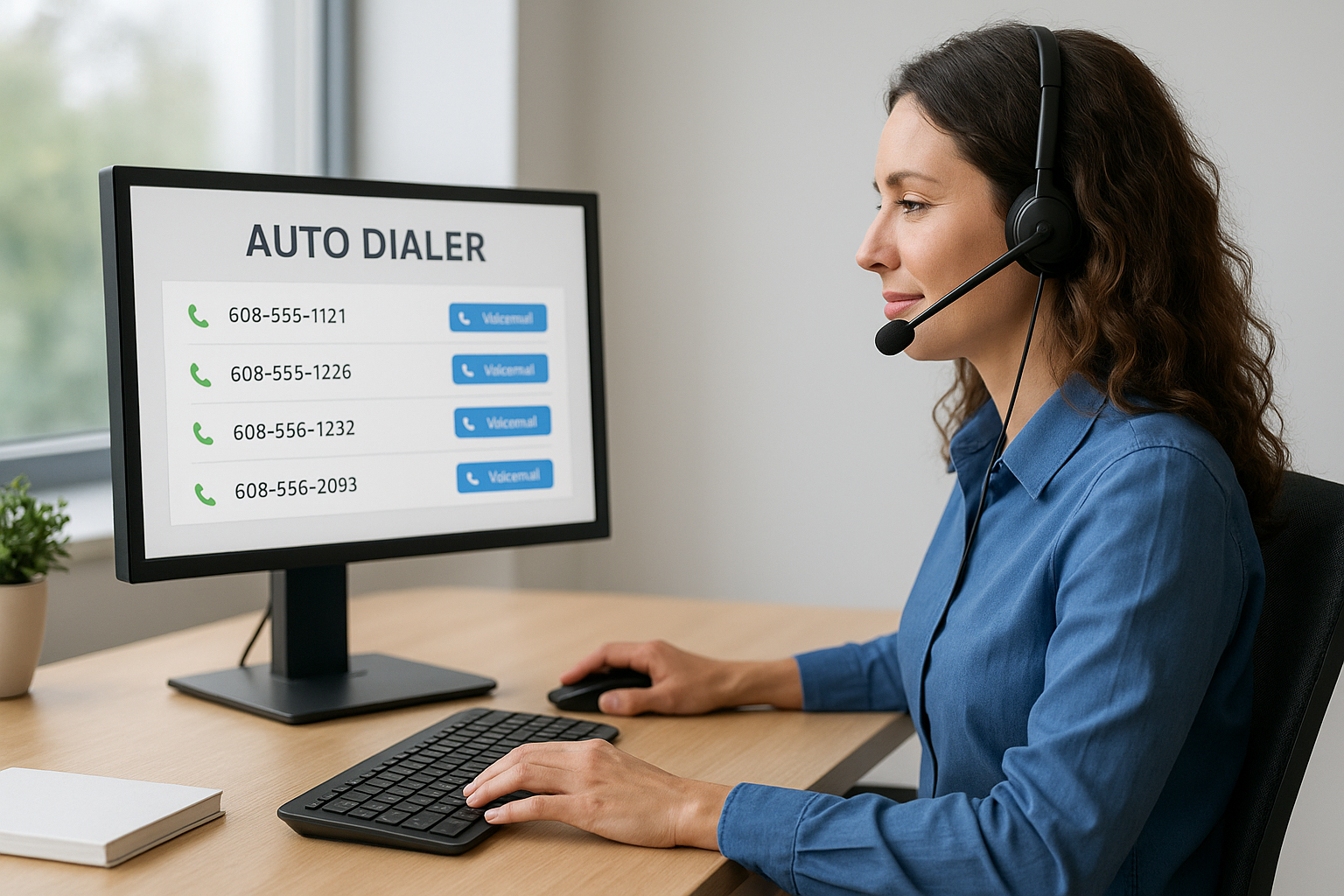
An auto dialer works through a list of phone numbers in sequence, calling one number at a time and waiting for the result before moving to the next. The system detects whether the call was answered by a person, went to voicemail, or hit a busy signal, then takes the appropriate action, whether that's connecting the agent, leaving a voicemail drop, or logging the outcome and moving on. Unlike the pacing algorithm driving a predictive dialer, an auto dialer follows a fixed, linear process without trying to anticipate agent availability or adjust its dial rate.
The sequential approach gives agents more control
Because an auto dialer calls one number at a time, your agents always know what's coming next. There's no risk of a call connecting before anyone is ready to answer it. This structure works well for teams handling warm or high-intent leads, where the quality of the opening moment matters more than raw call volume. Your agent can review the contact's details, prepare a personalized opener, and pick up the call feeling ready rather than reactive.
When your list is warm and your contact rate is high, the controlled pace of an auto dialer protects the experience for both your agent and the prospect.
Voicemail and call outcome handling
Auto dialers handle unanswered calls efficiently by automating voicemail drops, which lets your agents move to the next number without sitting through a full voicemail recording each time. The system logs every call outcome automatically, keeping your lead records current without manual entry. This matters in the broader predictive dialer vs auto dialer conversation because auto dialers trade raw speed for cleaner data and a more deliberate workflow, which fits teams where every lead counts and follow-up precision is non-negotiable.
Predictive vs auto dialer: key differences
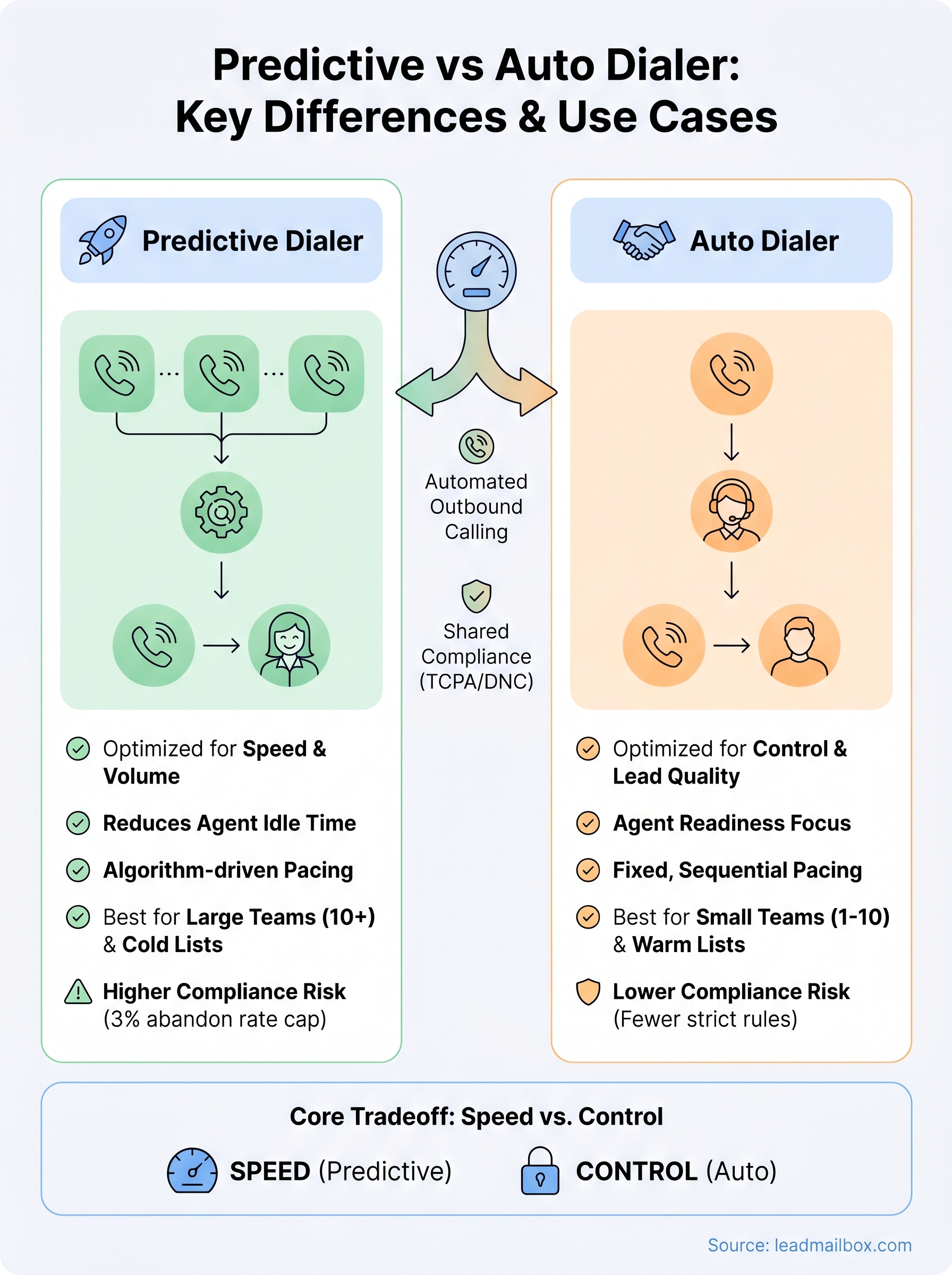
The predictive dialer vs auto dialer distinction comes down to one core tradeoff: speed against control. Both tools automate outbound calling, but they do it with different priorities and mechanics that make each one the right fit for a specific type of operation. Understanding where they diverge helps you make a choice you won't need to reverse six months in.
The wrong dialer doesn't just slow your team down. It creates friction with prospects and adds compliance risk that compounds over time.
Speed vs. control
Predictive dialers optimize for maximum conversation volume by calling ahead of agent availability. Your team spends less time waiting and more time talking. Auto dialers prioritize agent readiness and lead quality, calling one number at a time so your people are always set before a connection is made. The gap in raw call volume between the two systems can be significant when you're working large, cold lead lists, but that speed advantage disappears if your list is warm and every dropped connection costs you a real opportunity.
When each tool fits
Choosing between the two becomes straightforward once you map your team size, list quality, and daily call targets to the right system. Use this comparison to orient your decision:
| Factor | Predictive Dialer | Auto Dialer |
|---|---|---|
| Best team size | 10+ agents | 1-10 agents |
| Ideal list type | Cold, high volume | Warm, high intent |
| Call volume priority | Maximum throughput | Controlled pace |
| Agent idle time | Minimized | Moderate |
| Setup complexity | Higher | Lower |
Your list contact rate is the most practical filter. If fewer than 30% of numbers on your list pick up, the predictive dialer's parallel dialing model saves your team real hours each day. If your contact rate is high, the auto dialer keeps quality intact without unnecessary complexity.
US compliance and rollout checklist
Before you deploy either system, compliance has to be part of your planning, not an afterthought. Both the predictive dialer vs auto dialer decision and your legal obligations are connected: the tool you choose directly affects which regulations apply and how strictly you need to monitor your call activity.
Federal rules that apply to both dialer types
The Telephone Consumer Protection Act (TCPA) governs how businesses can contact consumers by phone, and it applies regardless of which dialer you run. You must have prior written consent before calling mobile numbers using an automated dialing system, and you must honor any number listed on the National Do Not Call Registry. Scrubbing your lead list against the DNC registry before every campaign is non-negotiable, and keeping records of consent documentation protects you if a complaint ever surfaces.
Non-compliance with TCPA can result in fines of $500 to $1,500 per violation, and class action lawsuits in this space are common.
Stricter rules for predictive dialers
The FTC's Telemarketing Sales Rule sets an abandoned call rate cap of 3% for predictive dialers, measured over a 30-day period. Any call that connects but reaches no live agent within two seconds counts as abandoned. Running a predictive dialer without monitoring this rate is a fast path to regulatory exposure. You also need to play a recorded identification message when a call is abandoned, identifying the business and providing a callback number.
Pre-launch rollout checklist
Before going live with either system, confirm each item below:
- Scrub your list against the national and state-level DNC registries
- Verify written consent documentation for all mobile numbers
- Configure your abandonment rate threshold at or below 3% for predictive systems
- Set up call recording disclosures where state law requires two-party consent
- Document your compliance workflow so your team follows the same process on every campaign
Next steps
The predictive dialer vs auto dialer decision gets easier once you work through the variables specific to your operation: team size, list quality, daily call targets, and your compliance readiness. If you're running a large outbound team on cold lists, a predictive dialer will cut idle time and drive more conversations per shift. If you're working warm leads with a smaller team, an auto dialer gives you the control and consistency you need without added complexity.
Either way, the right dialing system is only as effective as the platform supporting it. You need clean lead data, reliable telephony infrastructure, and compliance tools built into your workflow from the start. Patching together separate tools for each of those adds cost and creates gaps. LeadMailbox combines lead management, power dialing, SMS, email, and AI-powered communication in one platform built for sales teams that need to move fast without cutting corners on compliance.