

9 Lead Nurturing Best Practices To Convert More Leads
Most leads don't convert on the first touch. They need follow-up, relevant information, and consistent communication before they're ready to buy. Yet many sales teams still treat every new lead like it should close immediately, and then wonder why conversion rates stay flat. The gap between capturing a lead and closing a deal is where lead nurturing best practices make all the difference.
Effective nurturing isn't about blasting your database with generic emails or calling the same list until people stop picking up. It's about delivering the right message at the right time, through the right channel, whether that's a well-timed text, a personalized email, or a quick phone call. It requires a system that keeps your pipeline organized and your outreach consistent, which is exactly what we built LeadMailbox to do. Our platform brings lead management, communication tools, and AI-powered outreach together so nothing slips through the cracks.
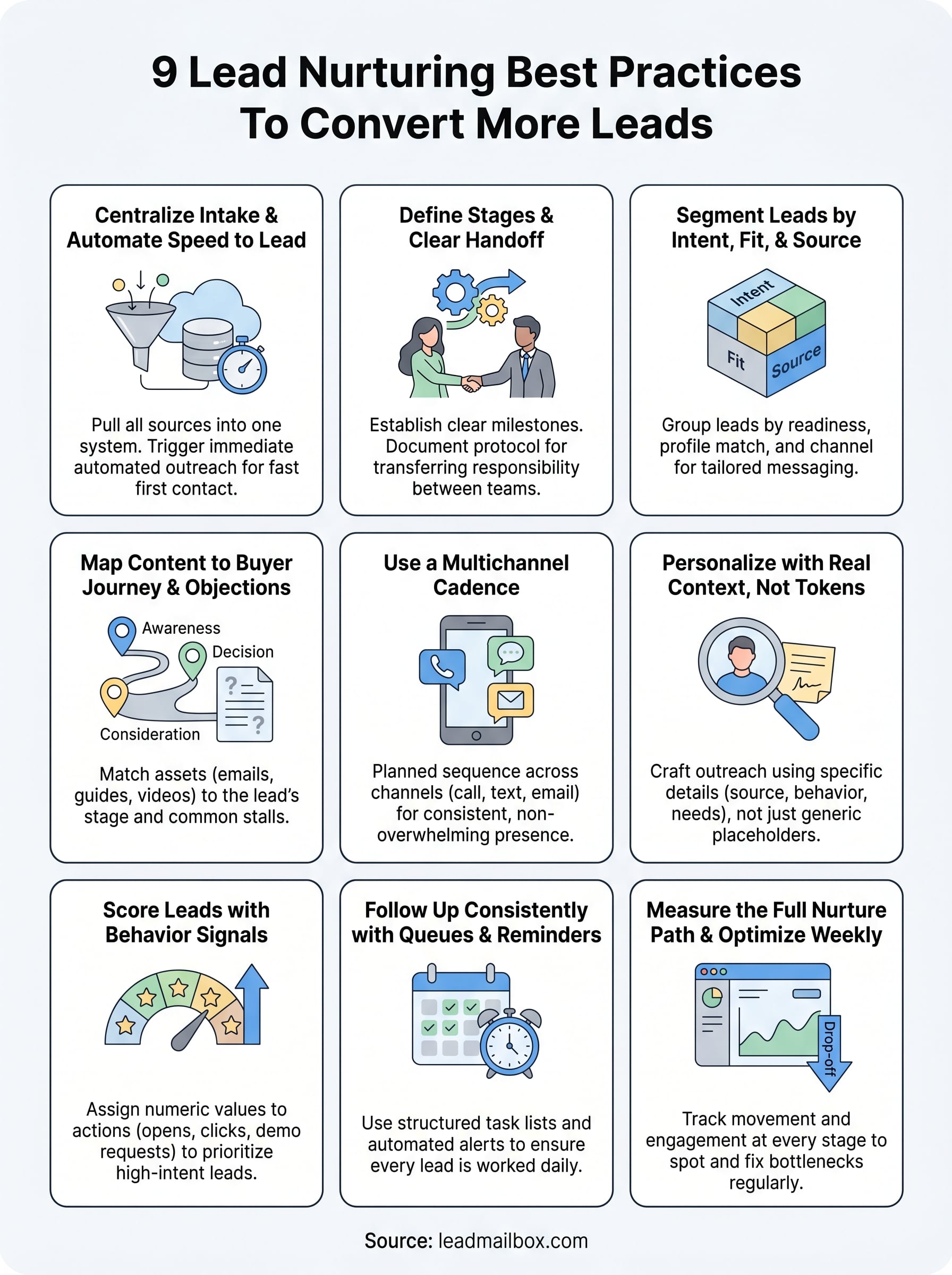
In this guide, we break down nine proven practices that help you nurture leads more effectively and turn more of your pipeline into revenue. Each one is actionable, whether you're refining an existing process or building your nurturing strategy from scratch.
1. Centralize lead intake and automate speed to lead
When leads arrive from paid ads, web forms, referrals, and third-party partners, they scatter across spreadsheets, inboxes, and tools that don't connect. Centralizing lead intake pulls every lead into one system the moment it arrives, giving your team a single source of truth instead of chasing data across multiple disconnected tabs.

What it is
Centralized intake means all your lead sources feed one platform automatically. Speed to lead is the time between a lead's form submission and your team's first contact. Harvard Business Review research found that contacting a lead within five minutes makes you 100 times more likely to connect than waiting 30 minutes. This single factor shapes whether your lead nurturing best practices succeed or stall before they even begin.
The faster your first contact, the higher your odds of keeping that lead engaged through the rest of your funnel.
How to do it
Map every lead source you use today, then route all of them into a single platform that triggers an immediate outreach action the moment a lead arrives. Use automated texts, call queue tasks, or insta-call features to handle that first touch without requiring a rep to manually check a form.
- Connect all paid lead providers via direct integrations
- Set up auto-response SMS within 60 seconds of form submission
- Use a power dialer to place calls within the first five minutes
Where it fits in the funnel
This practice lives at the top of your funnel, right at the entry point. A fast, relevant first contact sets the tone for everything downstream and keeps leads from going cold before your nurture sequence starts. Without centralization, even the best follow-up strategy fails because your team is working from incomplete, delayed, or duplicate data.
Mistakes that kill results
The most common mistake is relying on manual processes to route or follow up on new leads. Every minute of delay increases drop-off. Treating all lead sources equally is another problem because different sources carry different intent levels and require different follow-up urgency and messaging to be effective.
Metrics to track
- Speed to first contact: Target under five minutes for high-intent leads
- Source coverage rate: Percentage of lead sources feeding your central system
- Contact rate by source: Reveals which channels need faster routing
2. Define lead stages and a clear handoff between teams
When every rep defines "qualified" differently, leads fall through the gap between marketing and sales with no clear owner. Defined lead stages and a structured handoff process eliminate that ambiguity so your team acts consistently on every lead, every time.
What it is
Lead stages are the named milestones a prospect moves through from first contact to closed deal. Common stages include new, contacted, qualified, proposal sent, and won or lost. A handoff defines exactly when and how responsibility transfers from one team or rep to another.
How to do it
Document each stage with a clear definition and the specific action that moves a lead forward. Then set a written handoff protocol that includes who receives the lead, what data transfers with it, and what the next required action is.
- Assign stage ownership to a specific role
- Require a minimum data set before a lead can advance
- Use your platform to trigger task assignments automatically at each handoff point
Where it fits in the funnel
This practice applies across the entire funnel and anchors your lead nurturing best practices in a shared repeatable process. Without agreed-upon stages, your team applies inconsistent effort and loses visibility into where leads actually stall.
A clear handoff protocol turns individual effort into a system your whole team can run reliably.
Mistakes that kill results
The most common mistake is creating stages without exit criteria, so leads sit indefinitely in the wrong bucket. Failing to document the handoff is equally damaging, which means leads get dropped when reps change or leave their roles.
Metrics to track
- Stage conversion rate: Shows exactly where leads stall most often
- Handoff response time: How quickly a rep acts after receiving ownership
3. Segment leads by intent, fit, and source
Sending the same message to every lead is one of the fastest ways to kill engagement. Segmentation groups your leads based on what they want, how well they match your ideal customer, and where they came from, so your team can tailor outreach that actually earns responses instead of silence.
What it is
Segmentation divides your pipeline into distinct groups based on three factors: intent (how ready they are to buy), fit (how closely they match your target customer profile), and source (which channel or partner generated the lead). Each combination requires a different nurture approach to keep leads progressing rather than stalling.
How to do it
Start by defining your ideal customer profile, then score each new lead against it at intake. Tag leads by source automatically so your platform can apply the right follow-up sequence without manual sorting every time a new lead arrives.
- High-intent, high-fit leads: prioritize for immediate rep outreach
- Low-intent, high-fit leads: route into a longer educational nurture track
- Low-fit leads: deprioritize early to protect your team's time
Segmenting by all three factors together gives you the precision that makes lead nurturing best practices work at scale.
Where it fits in the funnel
This practice applies at the top and middle of your funnel, right after intake and throughout the nurture sequence. Strong segmentation ensures your messaging stays relevant as leads move through each stage rather than becoming generic over time.
Mistakes that kill results
The most common mistake is segmenting once and never updating the data. As leads engage or go silent, their intent signals shift, and your segments need to reflect those changes or your outreach loses relevance fast.
Metrics to track
- Segment-level conversion rate: Shows which groups respond best to your sequences
- Opt-out rate by segment: Flags mismatched messaging before it damages your pipeline
4. Map content to the buyer journey and objections
Sending a product demo link to a lead who just heard of you for the first time is like skipping straight to a closing pitch before you've earned the conversation. Mapping your content to where a lead sits in the buyer journey, and what objection they're most likely holding, keeps your outreach relevant and builds the trust needed to move them forward.
What it is
Content mapping connects specific assets (emails, case studies, guides, videos) to each stage of the buying process and to the common objections that stall deals at each point. Instead of recycling the same content across your whole pipeline, you match the message to the moment.
How to do it
List the three to five most common objections you hear at each funnel stage, then build or assign one content asset to address each one. Tie those assets to your nurture sequences so they deploy automatically when a lead reaches that stage.
- Awareness stage: educational content that frames the problem
- Consideration stage: case studies and comparisons that build confidence
- Decision stage: proof points and next-step offers that reduce friction
The right content at the right moment shortens the time a lead spends stuck at any single stage.
Where it fits in the funnel
This practice covers the full funnel, but it pays off most in the middle where leads stall longest. Strong content mapping is one of the lead nurturing best practices that separates teams with high engagement rates from those chasing cold pipelines.
Mistakes that kill results
The most common mistake is building content for the decision stage only and leaving early-stage leads with nothing useful to consume. Leads who receive nothing relevant at the awareness stage disengage before they ever reach a point where your offer makes sense.
Metrics to track
- Content engagement rate by stage: Tracks which assets actually move leads forward
- Objection resolution rate: Measures how often a specific asset eliminates a known stall point
5. Use a multichannel cadence that earns replies
Relying on a single channel to nurture leads is like knocking on one door and walking away if no one answers. A structured multichannel cadence combines calls, texts, and emails in a deliberate sequence so you reach leads where they're most likely to respond, rather than where it's most convenient for you.

What it is
A multichannel cadence is a planned sequence of touchpoints across different communication channels, spaced intentionally over days or weeks. The goal is consistent presence without overwhelming the lead, using each channel's strengths to carry different parts of your message.
How to do it
Build your cadence around three core channels: phone, SMS, and email. Start with a call on day one, follow with a text the same day if there's no answer, and send an email within 24 hours. Repeat with variation over the next two weeks.
- Day 1: call + voicemail, then SMS
- Day 2: personalized email with one clear next step
- Day 4: follow-up call, no voicemail this time
- Day 7: SMS with a direct question to prompt a reply
- Day 14: final email with a low-friction offer
A cadence only earns replies when every touchpoint adds value rather than repeating the same ask.
Where it fits in the funnel
This practice applies to the top and middle of your funnel where leads need consistent contact before they commit. Multichannel cadences are one of the lead nurturing best practices that keep your pipeline moving without requiring reps to track every touchpoint manually.
Mistakes that kill results
The most common mistake is front-loading all your effort into the first two days and then going silent. Leads who don't respond immediately rarely respond to a single follow-up, but they do respond to a consistent, well-spaced sequence that doesn't feel aggressive.
Metrics to track
- Reply rate by channel: Identifies which channel drives the most engagement in your audience
- Cadence completion rate: Tracks how often reps execute the full sequence versus stopping early
6. Personalize with real context, not tokens
Dropping a first name into a subject line is not personalization. Real personalization uses what you actually know about a lead, their industry, source, behavior, and stated needs, to craft outreach that feels written specifically for them rather than blasted to a list of thousands.
What it is
Personalization with real context means pulling specific details from a lead's profile into your messaging beyond basic tokens like {first_name}. It includes referencing the lead source, the product they inquired about, a recent interaction, or a known pain point that matches their segment. This level of relevance is what separates strong lead nurturing best practices from generic outreach that gets ignored.
How to do it
Start by capturing more than contact info at intake. Record the lead source, the specific offer they responded to, and any notes from the first conversation. Then build your templates to pull that context in naturally.
When your message references something real about the lead's situation, your reply rate climbs fast.
- Reference the specific product or service they expressed interest in
- Mention the channel they came from if it's relevant to the conversation
- Use conversation notes to acknowledge prior interactions directly
Where it fits in the funnel
This practice strengthens middle-of-funnel outreach where generic messages lose leads to competitors who feel more attentive and relevant to their situation.
Mistakes that kill results
The most common mistake is using tokens as a substitute for real context, which produces messages that feel automated even when the name is technically correct.
Metrics to track
- Reply rate by personalization level: Compare templated sends against context-rich messages
- Meeting booked rate: Measures whether personalization actually moves leads toward a sales conversation
7. Score leads with behavior signals and keep it clean
Lead scoring turns your pipeline from a flat list into a ranked queue where your team knows exactly who deserves attention today. When scoring uses actual behavior signals rather than assumptions, your reps stop wasting time on cold leads and focus effort where conversion is most likely.
What it is
Lead scoring assigns numeric values to actions a lead takes, such as opening emails, clicking links, requesting demos, or visiting your pricing page. The cumulative score reflects purchase intent, giving you a live signal about which leads are warming up and which need a different nurture track.
A score built on real behavior tells you far more than demographic data alone.
How to do it
Assign point values to specific actions and set a clear threshold that triggers a rep alert or stage change. Keep the model simple so your team actually uses it.
- Email open: 5 points
- Link click: 10 points
- Demo request or pricing page visit: 25 points
- No engagement in 30 days: subtract 10 points
Where it fits in the funnel
Scoring applies in the middle of your funnel and keeps your highest-intent leads from sitting uncontacted in a generic queue alongside cold prospects. It's one of the lead nurturing best practices that sharpens rep focus without requiring manual triage on every new contact.
Mistakes that kill results
The most common mistake is building a complex model and never auditing it. Scores drift out of alignment with actual conversion data over time, so run a monthly review to keep thresholds accurate and your pipeline clean.
Metrics to track
Track score-to-conversion rate to confirm your thresholds reflect real buying intent, and monitor score decay rate to catch leads losing engagement before they go fully cold.
8. Follow up consistently with queues and reminders
Even a solid nurture sequence breaks down when reps skip follow-ups because they're too busy or simply forget. Structured queues and automated reminders keep your team executing consistently so leads never sit untouched because someone's calendar got full.
What it is
A follow-up queue is a prioritized task list your platform builds automatically based on lead stage and last contact date. Reminders are the triggers that surface those tasks before a lead goes cold. Together, they replace good intentions with a system your team runs every day without relying on memory.
How to do it
Set your platform to auto-generate follow-up tasks after every outreach attempt and assign a due date to each one. Use reminders to alert reps before a task ages past your target window so no lead gets buried under newer activity.
- Create task rules for each lead stage with a maximum time between touches
- Assign priority scores so high-intent leads surface at the top of every queue
- Send automated reminders via SMS or email to keep reps accountable daily
Where it fits in the funnel
This practice runs across the full funnel but matters most in the middle, where leads spend the longest time between touches. Consistent follow-up is one of the lead nurturing best practices that separates teams with strong conversion rates from those losing leads to inaction.
A queue your team works daily is worth more than a perfect cadence nobody executes.
Mistakes that kill results
The most common mistake is building queues without clearing them, letting overdue tasks pile up until the list becomes too long to act on. Reps start ignoring an unmanageable queue, which defeats the entire purpose of the system.
Metrics to track
- Task completion rate: Measures how consistently reps work their daily queue
- Average time between touches: Confirms your cadence stays within target windows
9. Measure the full nurture path and optimize weekly
If you only track closed deals, you miss every signal that explains why leads stall or drop out before they ever reach a buying decision. Measuring your full nurture path means capturing data at each stage so you can spot and fix problems before they quietly drain your pipeline.
What it is
Full-path measurement tracks lead movement and engagement at every stage of your sequence, not just at the end. It shows you where leads enter, where they slow down, and where they exit, giving you the visibility to act on real patterns.
How to do it
Pull a weekly report covering stage conversion rates, engagement rates by channel, and lead age by stage. Look for any stage where leads sit longer than your target window, then adjust your cadence or content at that specific point.
Where it fits in the funnel
This practice runs across the entire funnel on a continuous basis. Strong measurement is one of the lead nurturing best practices that turns your process from a fixed workflow into one that improves every single week.
When you review data weekly instead of monthly, you catch problems while they're still small enough to fix without rebuilding your entire sequence.
Mistakes that kill results
The most common mistake is reviewing metrics too infrequently, which lets a broken sequence run for weeks unnoticed. Tracking vanity metrics like total emails sent instead of reply rates or stage conversion rates compounds the problem further.
Metrics to track
Track these two numbers every week to keep your nurture path improving:
- Stage conversion rate by week: Flags slowdowns and momentum drops fast
- Sequence drop-off rate: Pinpoints which specific touchpoint loses the most leads
What to do next
These nine lead nurturing best practices give you a complete framework to work from, but reading about them and executing them are two different things. The most effective way to start is to pick one or two practices that address your biggest current gap and build from there, rather than trying to overhaul your entire process at once.
If scattered lead intake or slow follow-up is costing you conversions, centralization and speed to lead are the right starting points. If your pipeline is organized but engagement drops off mid-funnel, focus on segmentation, content mapping, and your multichannel cadence first.
LeadMailbox brings the tools you need to execute these practices in one platform, from automated lead routing and AI-powered outreach to queues, scoring, and full-path reporting. Start there and build your nurture system on a foundation that handles the operational work so your sales team can stay focused on closing.